


P Up: Fashion Trivia & Games
0.00.00 Reviews
App Specs
- Version
- 1.0
- Updated On
- License
- Free
- Downloads
- 10,000+
- Developer
- Granicafe
- Categories
- Trivia
- Platform
- Android
Screenshots
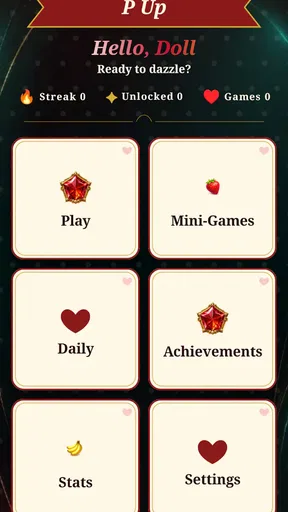
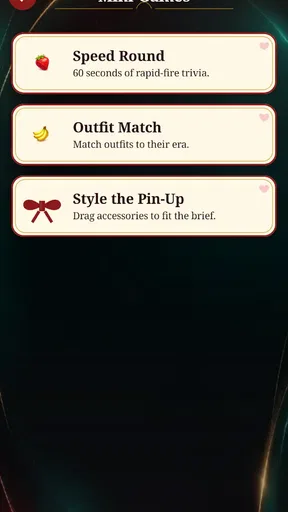
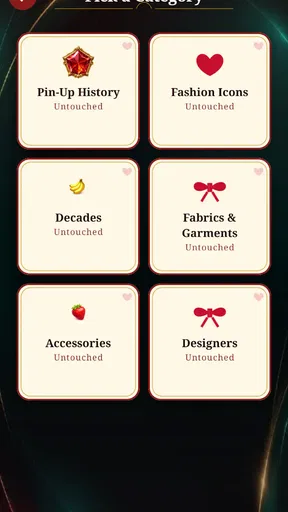
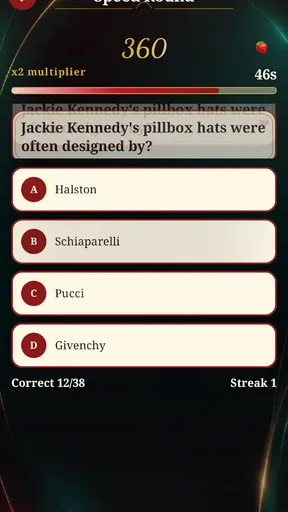
 Analysis by AppCompare
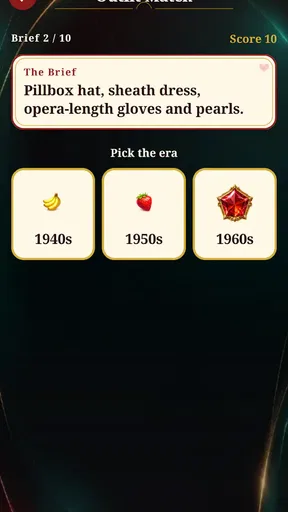
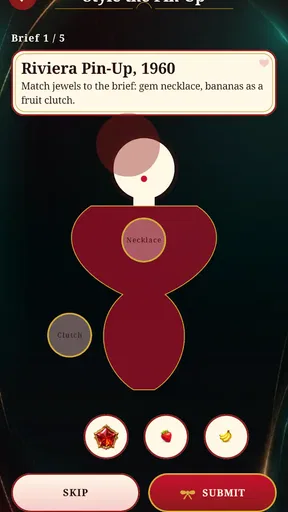
I went into P Up: Fashion Trivia & Games expecting a light quiz about clothes, but its appeal is more specific than that. This is a free trivia game from Granicafe built around vintage fashion: pin-ups, recognizable style icons, different decades, and the designers who shaped them. That focus gives each question a strong visual and cultural identity instead of making the experience feel like a general knowledge test with a few clothing questions mixed in.
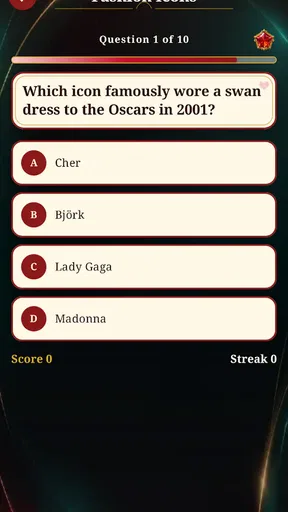
The first thing I noticed is how quickly the game gets to its central action. You read a fashion prompt, choose the answer that seems right, and immediately find out whether your instinct matches the game’s expected answer. There is no long setup to learn, which makes it easy to open during a short break. At the same time, the subject is specialized enough that I did not feel I was simply tapping through obvious questions. Even when I recognized a name or period, the wording made me pause and separate genuine knowledge from a guess based on appearance or reputation.
How the fashion quiz loop feels in practice
I found that the quiz loop works best when I give each prompt a little attention instead of tapping on instinct. In this section, I look at how that focused rhythm can make fashion clues easier to sort and remember, while also keeping expectations realistic about what a short trivia game can teach. That practical balance leads naturally into the first choice and the way it sets the tone.
The first choice sets the tone
The opening move is simple, but the theme changes how I approach it. With a typical trivia app, I might answer quickly and move on. Here, I found myself looking for clues in the relationship between a silhouette, an era, a public image, and a designer’s signature. That makes the first answer feel less like a random fact check and more like a small act of visual interpretation.
This is especially useful for players who enjoy fashion history but do not want a formal course. The game creates a low-pressure entry point: you can begin with what you already know, then use each question to identify gaps in your memory. Someone familiar with modern celebrity fashion may recognize the idea of an icon but still have to think carefully when the question moves toward older pin-up culture or a particular decade.
I also like that the theme gives the game a clear personality. A broad trivia title can jump from geography to science to entertainment without giving the player a reason to develop a particular way of thinking. This one encourages a narrower kind of attention. You start noticing recurring distinctions: a designer is not the same thing as a wearer, a decade is not just a visual mood, and an icon’s public image can be part of the clue without being the answer.
That narrower scope is also the first important trade-off. If you want a quiz covering sports, films, history, and science in one sitting, this will feel limited. Its value comes from staying with vintage fashion rather than pretending to be an all-purpose trivia library.
Worth Reading Before You Choose

Flipboard Shows What News Apps Must Do Beyond the Feed

Switching to Android Auto Means Rethinking Your Driving Routine

Google Calendar Makes a Crowded Week Easier to Manage

Ludo King Makes the Most of the Minutes Between Plans

Baby Panda World Brings Quick Play to Modern Phones, but Its Game Library Feels Busy

ESPN’s Live Game View Makes Following Close Games Easier
Feedback arrives before the question loses momentum
The core rhythm depends on the answer reveal. I choose an option, receive the result, and then decide whether I want to continue while the subject is still in my head. That short sequence gives the game a useful pulse: action, feedback, and another decision. A wrong answer does not need to end the experience emotionally; it becomes a prompt to remember the distinction the next time a related clue appears.
For me, the most satisfying moments are not only the correct answers. They are the near misses where I understand why my first choice was tempting but not quite right. Fashion trivia often works through association, so the feedback can expose where my mental categories are too broad. I may remember the look but confuse the decade, recognize the icon but misplace the designer, or know the designer’s name without connecting it to the right visual tradition.
That makes the game better suited to active attention than passive tapping. If I rush through every prompt without considering why an answer is correct, I get less from the session. My practical tip is to pause for a second before choosing and say the reason silently: “the period,” “the designer,” or “the person associated with this image.” That small habit turns each question into a memory exercise instead of a coin toss.
The limitation is that a quiz’s feedback is only as useful as the explanation surrounding it. When a game simply marks an answer and moves on, a missed question can remain a missed question. I would not treat this as a replacement for reading a book or watching a documentary about fashion history. I use it as a recall tool and a discovery prompt, then follow up elsewhere when a name or era catches my interest.
Why another question feels worthwhile
The reward in this kind of game is not complicated equipment or a large virtual world. It is the small satisfaction of recognizing a pattern and improving your sense of the subject. A correct answer confirms that a detail has stayed with you. A wrong one gives you a specific item to remember. The theme itself supplies the motivation: each round can make a familiar image feel more historically placed.
I found that the reward works best when I treat the app as a personal challenge rather than a competition. I am not opening it to prove that I know everything about clothing. I am opening it to see whether I can distinguish a designer’s influence from an icon’s image, or whether I can place a recognizable style in the right decade. That framing keeps the experience enjoyable even when my score is uneven.
There is also a social use that feels natural without requiring the game to become a party title. I can hand a question to a friend who likes old films, ask a fashion-minded relative to make the call, or use a difficult prompt as the start of a conversation about why a certain look became memorable. The subject is visual and familiar enough to invite discussion, but specialized enough that different people bring different knowledge.
For a realistic everyday session, I would use it while waiting for an appointment or during a short commute when I am not driving. I would play a few questions, stop after an answer that made me curious, and later search for more context through a separate source. That workflow is more rewarding than trying to force a long marathon. The game’s strongest role is as a compact spark for interest.
The reset is part of the appeal
After a short run, I usually reach a natural stopping point. The next session begins with the same basic promise: one more chance to test what I remember, repair a mistake, or see whether a familiar fashion clue appears in a different context. That reset matters because the game does not need a complicated commitment from me. I can leave and return without turning it into a daily obligation.
I recommend using the reset deliberately. If I miss several questions connected to designers, I mentally mark that as the area to watch during the next session. If I perform well on icons but struggle with decades, I slow down when a period clue appears later. This creates a lightweight personal progression even without treating the game like a formal study plan.
Another useful approach is to alternate between fast and careful sessions. A fast session tests instinct and recognition. A careful session tests whether I can explain the answer to myself before tapping. The first is convenient when I have only a moment; the second is better when I want the game to strengthen memory. That difference prevents the loop from becoming automatic.
The reset will not satisfy everyone. Players who need a substantial campaign, unlockable worlds, elaborate customization, or a story may find the return to question-answer-feedback too modest. This is a trivia game first. Its replay value depends on curiosity, subject interest, and the desire to improve recall, not on a large progression system I would associate with a role-playing or strategy game.
Where it fits beside other trivia options
Compared with a general trivia app, this game trades breadth for atmosphere. A general title is the better choice when I want constant changes of subject or a broad test of facts. Here, the narrower theme means the questions can feel more connected. I am building a small mental map of fashion history rather than jumping between unrelated categories.
Compared with a fashion reference app, it offers less room for deliberate browsing and more immediate testing. A reference tool is better when I want to look up a designer, compare eras, or read a sustained explanation. This game is better when I want to discover what I actually remember. I see the two formats as complementary: one supplies context, while the other exposes weak spots.
Compared with a multiplayer quiz, the experience feels more personal. I do not choose it when I want live rivalry or a noisy group activity. I choose it when I want to concentrate on a distinctive subject at my own pace. That makes it a good companion for quiet moments, but a less obvious pick for a party unless the group already enjoys vintage fashion.
The short description in the store is unusually brief, so the important practical takeaway is the theme rather than a long feature checklist. The game is about vintage fashion trivia, and that focus should guide the download decision. If pin-ups, style icons, decades, and designers sound like subjects you would willingly revisit, the compact loop has a clear reason to exist. If those topics are only mildly interesting, the limited scope may become noticeable quickly.
Who will get the most from it
I would recommend it to someone who enjoys fashion history in small portions, especially if visual recognition is more appealing than reading a long article. It also suits players who like quizzes with a strong identity. The Mature 17+ content rating is an important part of the decision, so younger players and families should check that fit before installing it.
The game can also work for a beginner who knows little about vintage fashion, provided they enjoy learning through mistakes. You do not need to arrive as an expert for the theme to be useful. In fact, the early uncertainty can make the feedback more valuable because each answer helps separate vague impressions from clearer knowledge.
I would skip it if your main goal is a broad educational reference, a deep fashion archive, or a long-form game with complex systems. I would also look elsewhere if you dislike repeating a focused question format. The title’s strength is concentration, and concentration naturally means fewer unrelated distractions.
Device fit and practical expectations
It is available as a free game, which makes it easy to try without turning the decision into a purchase commitment. Granicafe lists it as version 1.0, and it runs on Android 8.0 or later. That makes checking your device’s operating-system version a sensible first step before you plan a session.
The game has passed the ten-thousand-install mark, giving it a modest but real audience. I would not interpret that figure as proof that it will suit everyone; the vintage-fashion focus remains the deciding factor. For me, the better question is whether I want a themed quiz I can revisit, not whether I need the largest trivia community.
Because the app is free, I judge it mainly by how well it respects a short session and whether the questions make me think. I do not expect it to replace a full fashion-history resource. I expect a focused test, quick feedback, and enough curiosity to make another round feel worthwhile. That is a fair standard for this format.
My verdict on the complete loop
The loop is clear: I take a fashion question, commit to an answer, receive feedback, gain either confirmation or a new correction to remember, and then decide whether to reset for another round. The reason to continue is not a complicated reward ladder. It is the desire to recognize more, guess less, and build a sharper sense of how vintage fashion connects people, periods, and design.
The best way to enjoy this game is to treat each answer as a clue to investigate, not merely a point to collect. That approach makes the focused subject feel richer and gives wrong answers a purpose. It also keeps expectations realistic: this is a compact trivia experience, not a complete course or a broad entertainment hub.
My final recommendation is positive for the right reader. If you already enjoy pin-up imagery, classic style, fashion personalities, or the history of designers, I think Granicafe’s focused approach is worth trying. If you want variety across every trivia subject or a substantial game world, choose a broader alternative instead. For short, repeatable sessions with a distinctive fashion theme, P Up: Fashion Trivia & Games has a clear identity and a satisfying reason to begin one more round.
Pros
- Quick fashion quizzes make it easy to play in short sessions.
- Covers style
- designers
- trends
- and fashion history.
- Bright visuals and outfit-focused content feel engaging.
- Useful for testing your fashion knowledge while learning new facts.
- Simple controls make the game accessible for casual players.
Cons
- Some questions may feel too easy for experienced fashion fans.
- Progression can become repetitive after extended play sessions.
- Certain content or features may depend on an internet connection.
- Ads may interrupt gameplay or reduce the overall pace.
- Fashion preferences are subjective
- so some answers may feel debatable.
FAQs for P Up: Fashion Trivia & Games
What is P Up: Fashion Trivia & Games?
P Up: Fashion Trivia & Games is a fashion-focused mobile experience that combines trivia questions, style challenges, and game-like progression. Players can test their knowledge of clothing, trends, designers, beauty, and pop culture while completing activities designed around fashion. It is aimed at users who enjoy casual games with a creative, competitive, and lifestyle-oriented theme.
How does the gameplay work in P Up: Fashion Trivia & Games?
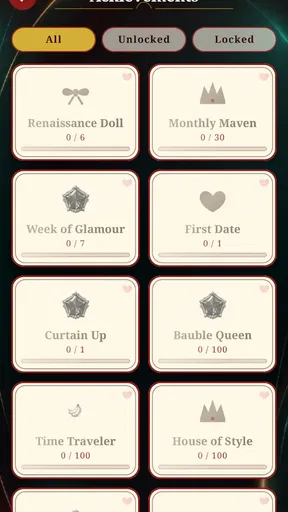
The app generally centers on answering fashion-related trivia and taking part in interactive challenges. Depending on the mode available, your performance may earn points, rewards, or progress toward new content. The questions can cover different areas of fashion, so the experience is more enjoyable if you are interested in style history, celebrities, brands, and current trends. Some features may require progression before they become available.
Is P Up: Fashion Trivia & Games free to download and play?
P Up: Fashion Trivia & Games can typically be downloaded without an upfront purchase, allowing users to try the main experience before spending money. However, availability of optional in-app purchases, premium content, virtual items, or advertising may depend on the version and platform. Before downloading, check the Google Play Store or Apple App Store listing for current pricing, subscriptions, and purchase details.
Does P Up: Fashion Trivia & Games require an internet connection?
An internet connection may be needed for several important functions, including downloading updates, loading advertisements, synchronizing progress, accessing online rankings, and receiving new content. Some basic parts of the game might work temporarily without a connection, but offline availability can vary by device and app version. For the most reliable experience, use a stable Wi-Fi or mobile data connection.
Is P Up: Fashion Trivia & Games suitable for children?
The game may be appealing to younger players because of its casual format and fashion theme, but parents should review the official age rating and privacy information before installation. Trivia topics, advertising, social features, and optional purchases can differ between versions. If children use the app, enabling purchase restrictions and checking permissions is recommended, especially on shared family devices.


